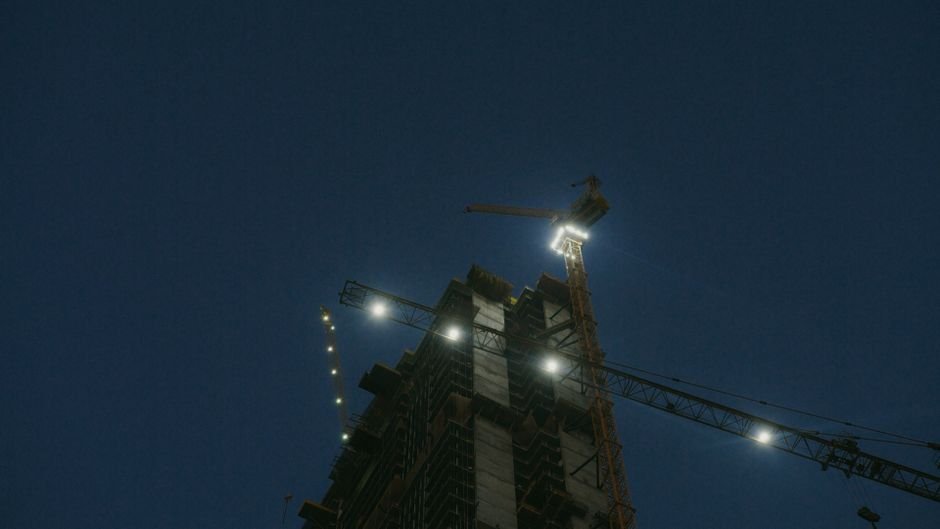
A group of Chinatown residents and neighborhood advocacy groups is taking the city to court over plans to let construction crews work nights and Saturdays on the new Manhattan jail, arguing the schedule will wreck their sleep and fill the air with dust.
The suit, filed earlier this week, targets the Chinatown site of one of four borough-based jails meant to replace the Rikers Island complex. The Manhattan building is set to be the world’s tallest jail, according to the filing. Demolition and construction there began in 2024 and, until now, has mostly stayed within the city’s standard permitted hours of 7 a.m. to 6 p.m.
That changed in early October, according to the suit. The city issued permits allowing weekday work from 6 a.m. to 12 a.m., plus Saturday work from 9 a.m. to 5 p.m. The permits also allow truck deliveries between 4 a.m. and 7 a.m. The suit says the city plans to keep renewing them until the jail is finished in 2032, and that construction is slated to run for nearly the next seven years.
The plaintiffs claim the city violated local administrative law and the state’s environmental review law. They are asking a state judge to bar after-hours work on the jail “except as needed on an occasional temporary basis.” The filing says the extended schedule “places an excessive burden on the surrounding community” and points to residents whose sleep has already been disrupted since the hours changed.
The environmental review is central to the case. According to the suit, that review assumed construction would run during regular weekday hours over roughly four years, with only occasional weekend or night work, and so concluded noise would not be a significant problem for neighbors. The suit argues the city never analyzed whether near-round-the-clock work or a later completion year would create new or different significant impacts, calling that a “clear violation” of state law.
The city’s side of the ledger is about time and money. Officials have said that without after-hours work, the Chinatown jail’s opening slips two years, to 2034, and the project costs $340 million more, according to the lawsuit. The suit also notes that a 2021 local law ordered Rikers closed in 2027, a deadline city officials have said they cannot meet because the borough-based jails are behind schedule.
One plaintiff is Jon Alpert, who runs the nonprofit media arts center DCTV nearby. According to the suit, DCTV has already moved audio recording sessions to the evening because of daytime construction, and those sessions “will no longer be possible” with after-hours work. The filing says documentary screenings at the center would be “totally disrupted” by the noise and dust.
The other plaintiffs are Chinatown resident Jan Lee and Neighbors United Below Canal, the organization he founded; residents Betty Lee and Ping Ai Mei; and the advocacy group Welcome to Chinatown. The contractor, Tutor Perini Corporation, is also named in the suit.
A City Hall spokesperson said the Mamdani administration plans to respond to the claims in court.
Frequently Asked Questions
Why are Chinatown residents suing over the Manhattan jail construction?
Residents and advocacy groups argue that extended night and Saturday construction hours disrupt sleep and bring dust and noise. They also contend the environmental review did not properly assess the impacts of this extended schedule.
What construction hours were approved for the Chinatown jail site?
In early October the city issued permits allowing weekday work from 6 a.m. to midnight, Saturday work from 9 a.m. to 5 p.m., and truck deliveries from 4 a.m. to 7 a.m. These replace the standard 7 a.m. to 6 p.m. limit.
Why does the city say after-hours construction is needed?
City officials say without after-hours work the Chinatown jail’s opening would slip two years to 2034 and cost $340 million more, according to the lawsuit. The city says the extended hours are needed to keep the project on schedule and within budget.
When is the Manhattan jail expected to be completed?
The city plans to keep renewing the extended construction permits until the Manhattan jail is finished in 2032, with construction slated to run for nearly seven more years. The building is set to be the world’s tallest jail, according to the filing.
What relief are the plaintiffs seeking in the lawsuit?
The plaintiffs are asking a state judge to bar after-hours work on the jail except as needed on an occasional temporary basis. They claim the city violated local administrative law and the state’s environmental review law.

Leave a Comment