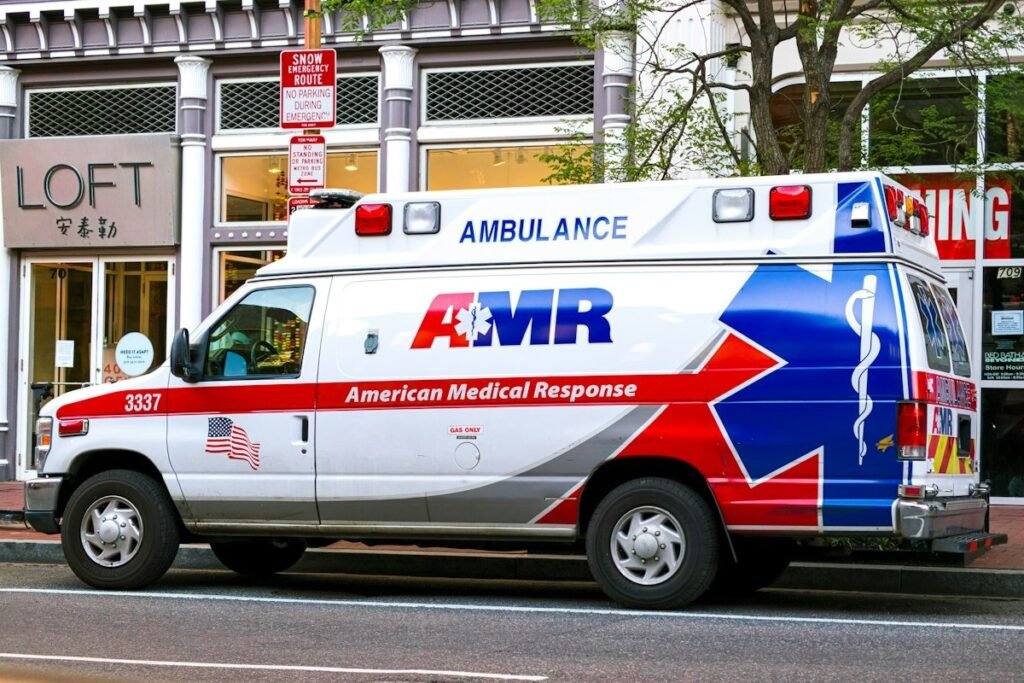
Between fiscal year 2015 and fiscal year 2026, emergency medical responses handled by the Fire Department of the City of New York (FDNY) climbed by 11.0 percent to 1.14 million calls, with life-threatening medical emergencies surging by 22.9 percent even as the municipal paramedic workforce remained effectively flat at just 900 active personnel across all five boroughs. As detailed in a comprehensive operational investigation released by the Office of the New York City Comptroller, the widening structural imbalance between call volume and frontline clinical staffing has triggered historic response-time delays, escalating burnout, and an unprecedented attrition pipeline that threatens the basic reliability of pre-hospital emergency care throughout New York City.
Response Time Degradation: A 41 Percent Spike in Life-Threatening Wait Times
The operational consequence of rising call volumes against an inelastic workforce is visible across municipal dispatch metrics. According to audited dispatch records from the FDNY and the Comptroller’s office, average FDNY ambulance response times to life-threatening medical incidents lengthened by 3 minutes and 50 seconds between FY 2015 and FY 2026—a 41.2 percent deterioration in critical response windows where seconds directly dictate neurological survival and cardiac arrest outcomes. For non-life-threatening calls, the degradation has been even more severe, with average ambulance response times expanding by 14 minutes and 49 seconds, more than doubling over the eleven-year review period.
Crucially, the nature of FDNY’s primary workload has fundamentally flipped. While traditional structural fire emergencies declined by more than 11 percent over the past decade, life-threatening medical calls now account for 53.4 percent of all fire company runs, up from 48.3 percent in FY 2015. Yet despite engine companies increasingly serving as initial on-scene responders, New York City firefighters hold only Certified First Responder with Defibrillation (CFR) certifications. They cannot administer advanced pharmaceuticals, execute endotracheal intubations, or interpret complex electrocardiograms—clinical interventions restricted exclusively to Advanced Life Support (ALS) paramedics.
Comparative Compensation: The First-Responder Wage Chasm
At the core of the staffing bottleneck lies an acute pay disparity separating Emergency Medical Services from every other municipal first-responder agency. As budget hearings before the New York City Council Committee on Finance and Public Safety have repeatedly highlighted, the municipal EMS labor union—Uniformed EMTs, Paramedics & Fire Inspectors Local 2507—has operated without an active collective bargaining contract since July 29, 2022. As a consequence, base wages remain pegged to expired 2022 civilian pay bands, creating profound divergence from police, sanitation, and firefighting personnel.
| First-Responder Title & Agency | Starting Base Salary | 5.5-Year Maximum Base Salary | 5-Year Salary Growth (%) | Annual Departure Rate | Median Tenure in Title |
|---|---|---|---|---|---|
| Emergency Medical Technician (FDNY EMT) | $43,932 | $68,700 | +56% | 15% | 3.8 Years |
| Paramedic (FDNY ALS) | $58,088 | $86,348 | +49% | 12% | 5.4 Years |
| Firefighter (FDNY Suppression) | $54,122 | $105,106 | +94% | 7% | 8.1 Years |
| Police Officer (NYPD Patrol) | $55,942 | $109,107 | +95% | 8% | 7.9 Years |
| Sanitation Worker (DSNY Operations) | $47,752 | $95,504 | +100% | 5% | 9.2 Years |
The Promotion Drain: Institutional Cannibalization of Clinical Expertise
The compensation gap generates an institutional distortion unique to New York City: the FDNY effectively cannibalizes its own medical division. The promotional exam from EMT to firefighter serves as the primary mechanism for emergency medical workers to attain middle-class wages and uniformed pension protections. Between FY 2019 and FY 2026, approximately 4,300 EMTs and paramedics left their titles—a figure identical to the total number of firefighter departures, despite firefighters outnumbering combined EMS personnel by more than two to one.
In FY 2026 alone, 58 percent of EMT departures and 45 percent of paramedic departures were direct transfers into the firefighter title. This dynamic produces massive institutional churn. The median time in title for an FDNY firefighter stands at 8.1 years, compared to just 3.8 years for EMTs and 5.4 years for paramedics. Thousands of hours of clinical field training and patient triage experience are routinely drained from municipal ambulances, forcing the city into a permanent, costly cycle of recruit academy training and exorbitant overtime expenditures to cover basic shift minimums.
Fiscal Modeling: What Does True Parity Actually Cost?
City Hall budget analysts have historically resisted full wage parity by citing fiscal constraints. The Comptroller’s fiscal modeling provides the first rigorous public price tag for resolving the labor impasse. Elevating EMS compensation to full parity with firefighter salary scales and the uniformed wage pattern would require an estimated $289 million in additional recurring annual funding, including pension and fringe obligations. Across the five-year contract period spanning FY 2023 through FY 2027, the cumulative fiscal impact would total $1.23 billion.
An alternative benchmark modeled by municipal fiscal monitors examines parity with private voluntary hospital networks (such as Mount Sinai, Northwell, and NewYork-Presbyterian, which operate 911-participating ambulances). Under this private-sector voluntary standard, the city’s additional funding obligation would be substantially lower: $98 million in FY 2027 and $352 million across the collective bargaining window. Proponents of contract reform argue that significant portions of these expenditures would be offset immediately by reductions in mandatory overtime, lower academy recruitment costs, and enhanced insurance reimbursement capture through modernized billing systems.
Policy Pathways for Municipal Stability
Achieving stability within New York City’s emergency pre-hospital care network requires moving beyond temporary administrative band-aids. Key reform pathways under evaluation by municipal policymakers include:
- Expedited Collective Bargaining Resolution: Finalizing an updated labor agreement with Local 2507 that bridges the starting wage gap ($43,932 versus $54,122+) and establishes realistic step increments to stem fifth-year workforce hemorrhaging.
- Transition Toward a Dual Fire-Medic Hybrid: Implementing cross-credentialing frameworks similar to those utilized in St. Paul and other metropolitan fire services, where dual-certified firefighter-paramedics provide higher clinical care on frontline apparatus.
- Modernizing Ambulance Billing and Medicaid Reimbursement: Capturing millions in uncollected commercial insurance and federal reimbursement to directly cross-subsidize Advanced Life Support fleet technology and wage enhancements.
As New York City enters the second half of the decade with aging demographics and complex public health pressures, the stability of its emergency medical system can no longer be treated as a secondary municipal priority. Ensuring that emergency dispatchers can deploy experienced, adequately compensated paramedics to life-threatening calls is not merely a budgetary decision; it is the fundamental baseline of urban public safety.

Leave a Comment